SEO (Search Engine Optimization)
Search Engine Optimization (SEO) is a digital marketing strategy that focuses on improving a website’s visibility and ranking on search engines such as Google, Bing, and Yahoo. Whenever users search for information, products, or services online, search engines display a list of relevant websites based on their algorithms. SEO aims to optimize a website so that it appears among the top search results, increasing the chances of attracting visitors without relying on paid advertisements. Since millions of people use search engines every day to find solutions to their problems, businesses that rank higher are more likely to receive greater traffic, generate leads, and increase sales.
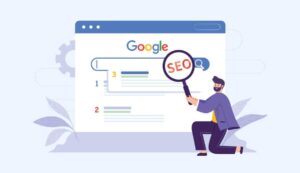
The primary objective of SEO is to drive organic traffic, which refers to visitors who find a website naturally through search engine results rather than through paid promotions. Organic traffic is highly valuable because users actively searching for a product or service often have a stronger intent to engage or make a purchase. Unlike paid advertising, where visibility ends when the advertising budget is exhausted, SEO provides long-term benefits by continuously attracting visitors through high-quality optimization efforts.
SEO is built on three major pillars: On-Page SEO, Off-Page SEO, and Technical SEO. On-Page SEO involves optimizing everything within the website itself, including page titles, meta descriptions, headings, URLs, images, internal links, and content. It ensures that every webpage is well-structured, informative, and easy for both users and search engines to understand. Proper keyword placement, engaging content, and a logical website structure help search engines identify the relevance of a page for specific search queries, improving its chances of ranking higher.
Off-Page SEO refers to optimization activities performed outside the website to build its authority and credibility. One of the most important factors in Off-Page SEO is backlink building, where reputable websites link to your content. Search engines interpret these backlinks as votes of confidence, indicating that your website provides valuable information. Other Off-Page SEO strategies include social media promotion, influencer collaborations, guest blogging, online directory listings, and brand mentions across trusted platforms. A strong Off-Page SEO strategy enhances a website’s reputation and significantly contributes to better search rankings.
Technical SEO focuses on the backend aspects of a website that influence its performance and accessibility. It ensures that search engine bots can efficiently crawl and index the website. Important technical factors include website loading speed, mobile responsiveness, secure HTTPS connections, XML sitemaps, structured data, proper URL structures, and fixing broken links or duplicate content. As mobile internet usage continues to grow, search engines prioritize websites that provide a fast and seamless experience across all devices. A technically optimized website not only improves rankings but also enhances user satisfaction.
One of the most critical elements of SEO is keyword research. This process involves identifying the words and phrases that potential customers type into search engines when looking for information or services. Digital marketers use specialized tools to analyze search volume, competition, and user intent before selecting target keywords. These keywords are then naturally incorporated into website content, headings, URLs, image alt text, and meta descriptions. However, modern SEO discourages excessive keyword repetition, known as keyword stuffing. Instead, search engines favor content that answers user questions comprehensively and naturally while maintaining readability and value.
Content marketing plays a central role in successful SEO strategies. High-quality content such as blog posts, articles, service pages, guides, case studies, FAQs, and videos helps establish a website as a reliable source of information. Search engines prioritize websites that consistently publish original, informative, and engaging content because it enhances user experience. Businesses that regularly update their content with relevant and accurate information often experience better rankings and increased customer trust.
User experience (UX) has become an increasingly important ranking factor in SEO. Search engines evaluate how users interact with a website by measuring factors such as page loading speed, mobile usability, navigation simplicity, bounce rate, and time spent on pages. A website with a clean design, intuitive navigation, and fast performance encourages visitors to stay longer and explore more content. This positive engagement signals to search engines that the website provides value, potentially improving its ranking position.
Local SEO is another specialized area that focuses on helping businesses appear in location-based searches. For example, when users search for “best bakery near me” or “digital marketing agency in Kochi,” search engines display businesses based on proximity and relevance. Local SEO involves optimizing business profiles, collecting customer reviews, maintaining consistent contact information, and targeting location-specific keywords. It is particularly beneficial for small and medium-sized businesses seeking to attract customers from their local area.
SEO is a continuous and evolving process rather than a one-time task. Search engine algorithms are updated regularly to improve search quality and combat spam practices. As a result, businesses and marketers must continuously monitor website performance, analyze traffic data, update outdated content, improve technical aspects, and adapt to new algorithm changes. Regular SEO audits help identify issues and opportunities for improvement, ensuring that the website maintains its competitive position in search results.
The benefits of SEO extend far beyond higher rankings. A well-executed SEO strategy increases brand visibility, builds credibility, generates qualified leads, improves customer trust, enhances user experience, and provides one of the highest returns on investment among digital marketing techniques. Since users generally trust organic search results more than paid advertisements, businesses that achieve strong organic rankings often enjoy long-term growth and sustainable online success.
Let’s contact me,
Whether you’re looking to grow your business through SEO, performance marketing, content strategy, or website development, I’m here to help. Get in touch today, and let’s discuss how we can achieve your business goals together.